
Many buyers like magnetic boxes because they feel clean, strong, and premium. But a magnetic rigid box is not always the cheapest choice. I usually suggest it when the product needs a better opening experience, stronger protection, and a more gift-ready look.
Magnetic closure boxes are best for premium gift sets, cosmetics, jewelry, candles, electronics, samples, and brand presentation kits. They use rigid board, wrapped paper, and hidden magnets to create a strong box with a smooth closing feel. For low-volume launches, the unit price can feel high because tooling, printing setup, hand assembly, inserts, and shipping volume are shared by fewer boxes.
Before choosing this structure, it helps to understand what the magnet really does.
What Is a Magnetic Closure Box?
A magnetic closure box is a rigid gift box with hidden magnets in the flap and front panel. It closes with a soft snap, so the packaging feels more secure and more premium.
A magnetic closure gift box is made from greyboard, printed or specialty wrapping paper, and small hidden magnets. It is often used for luxury gifts, beauty sets, jewelry, candles, electronics, and presentation kits. Compared with a folding carton, it feels stronger, opens more slowly, and gives the buyer a better unboxing experience.
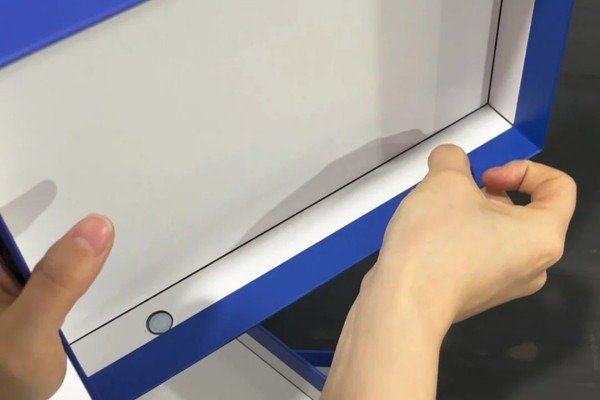
How the Structure Works
From the outside, many magnetic gift boxes look simple. But inside the structure, there are several layers.
The main body is usually made from 2.0 mm or 3.0 mm greyboard. This board gives the box its hard shape. Then we wrap the board with printed paper, specialty paper, textured paper, or laminated paper.
The magnets are hidden under the wrapped paper. One magnet is normally placed inside the flap. Another magnet is placed in the front wall of the box. When the lid closes, the two magnets meet and create a clean closing feel.
A good magnetic box should not be too loose. It should also not feel too hard to open. The closing strength depends on box size, magnet size, board thickness, paper thickness, and the position of the flap.
Common Magnetic Closure Box Types
| Structure Type | Best Use | Buyer Benefit | Factory Note |
|---|---|---|---|
| Book-style magnetic box | Gift sets, cosmetics, electronics | Premium opening feel | Strong but takes more shipping space |
| Magnetic flap gift box | Small gifts, cards, samples | Simple and elegant | Good for light products |
| Foldable magnetic box | Apparel, larger gift sets | Saves freight volume | More handwork and magnet alignment needed |
| Magnetic lid box | Presentation kits, luxury packaging | Clean display style | Needs careful lid fitting |
| Shoulder magnetic box | Jewelry, fragrance, small premium items | More refined structure | Higher cost and more assembly steps |
Not every product needs a magnet. For a simple mailer or low-price retail item, a tuck box may be enough. But for a product that needs a strong first impression, a magnetic rigid box can make the product feel more complete.
For example, a perfume discovery set, a candle set, or a jewelry starter kit can look much better in a hard gift box with magnetic closure lid. The customer can keep the box after opening it. That makes the packaging part of the brand experience, not only a shipping container.
I also like this structure for sales kits. When a brand sends samples to buyers, distributors, hotels, or retail partners, the box should help the product look ready for business. A weak box can make even a good product feel unfinished.
When Should You Use a Magnetic Rigid Box?
You should use a magnetic rigid box when the product has a premium price, needs better protection, or needs a strong gift presentation. It is also useful when the buyer may keep the box after purchase.
Custom magnetic gift boxes are a good choice for products that need a higher perceived value. They work well for beauty sets, jewelry, fragrance, candles, electronics, apparel accessories, corporate gifts, and launch kits. If your product sells at a premium price, the magnetic closure can support the brand story and improve the unboxing moment.

Use It When the Product Needs a Gift Feeling
A magnetic rigid box is not only a container. It also tells the customer that the product is special.
For gift products, the opening experience matters. A magnetic closure gives a small moment of surprise. The lid opens like a book, and the product appears inside the box. This is why many brands use this style for holiday gifts, influencer kits, welcome boxes, and premium product launches.
A magnetic closure also helps when the box will be opened many times. A folding carton may tear or lose shape after repeated use. A rigid magnetic box can stay clean and strong for longer.
Use It When the Product Needs Better Protection
Many products need more support than a paperboard folding carton. Glass bottles, candles, watches, jewelry, devices, and sample sets often need a stronger outer box.
The rigid board gives the package better shape retention. The insert holds the product in place. The magnetic flap keeps the lid closed during display and light handling.
For shipping, the magnetic box is still not a replacement for an outer carton. We usually suggest an export carton outside. For fragile products, we also check the insert, product weight, and drop risk before confirming the structure.
Use It When Brand Image Matters
Some packaging choices are about cost. Some are about brand position.
If the product is sold as premium, the package should not feel too basic. A magnetic box can help the buyer feel the value before they touch the product. This is very important for cosmetics, fragrance, jewelry, and gift sets.
Here is a simple way to think about it.
| Product Situation | Magnetic Box Recommendation |
|---|---|
| Low-price item for mass retail | Usually not necessary |
| Premium product with gift use | Strongly recommended |
| New product launch kit | Recommended |
| Fragile product with insert need | Recommended after structure check |
| Very small test order with tight budget | Use carefully |
| E-commerce shipping only | Needs outer mailer or shipping carton |
For a new brand, I do not always suggest the most expensive structure first. Sometimes a simple paper box with a nice insert is more practical. But when the product price, customer expectation, and brand image match, magnetic closure boxes can be a very good choice.
Why Are Magnetic Gift Boxes Expensive at Low Quantity?
Many buyers think the high price comes from the material. In fact, low-volume magnetic boxes are expensive because setup cost, tooling, printing, hand assembly, insert work, and shipping volume are divided by fewer pieces.
Small orders of magnetic boxes wholesale are often costly because the fixed costs do not disappear. A factory still needs dielines, cutting tools, printing setup, wrapping setup, magnet placement, hand assembly, insert production, and quality checking. When the order is only 100 or 300 pieces, each box carries a larger share of these costs.
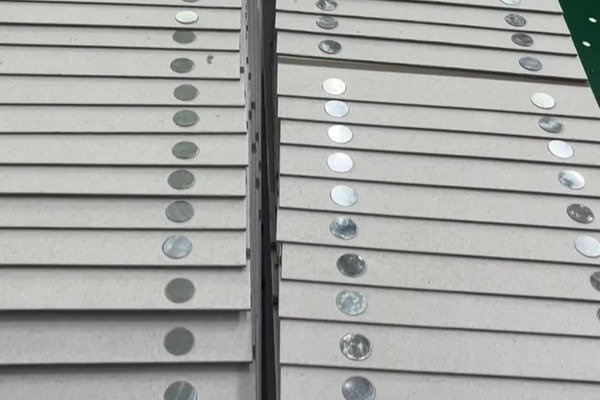
The Material Is Only One Part of the Cost
For many startup buyers, the first question is simple: “Why is the box so expensive?”
This is a very fair question. I see this often from founders preparing a low-volume launch. They may want 100, 200, or 300 boxes first. They need to test the market, control cash flow, and avoid too much inventory.
The challenge is that a magnetic rigid box is not produced like a simple flat paper card. It has more steps.
The factory needs to make a dieline first. Then the cutting die must match the box size. Printing also needs setup. If the box uses foil stamping, embossing, debossing, spot UV, or Pantone color, each process may need extra setup.
After that, workers need to wrap the greyboard with paper. They need to align edges, corners, magnets, and inner panels. If there is an insert, the insert must also be cut, wrapped, glued, or fitted.
So the cost is not only paper and magnets. It is also preparation, machine setup, handwork, and quality control.
Why MOQ Matters So Much
MOQ is not only a factory rule. It is also a cost-sharing issue.
For example, the same cutting die may be used for 100 boxes or 1,000 boxes. The setup time may be similar. But when the order is small, each box carries more setup cost.
This is why the unit price can drop a lot when the quantity increases. It is not because the factory suddenly uses cheaper material. It is because the fixed cost is spread across more boxes.
| Cost Item | Low Quantity Impact | Why It Matters |
|---|---|---|
| Dieline and cutting die | High cost per box | Tooling is shared by fewer pieces |
| Printing setup | High cost per box | Machines need preparation anyway |
| Foil or embossing plate | High cost per box | Plate cost is fixed |
| Hand assembly | Still required | Rigid boxes need manual work |
| Insert production | Often custom | Size and shape must fit the product |
| Shipping volume | Can be high | Rigid boxes take more space |
Freight Can Also Change the Real Cost
Rigid boxes are strong, but they also take space. This affects freight.
A non-foldable magnetic box ships in its final shape. That means one carton may only hold a limited number of pieces. For large boxes, the shipping volume can become a major cost.
For air shipping, dimensional weight can also affect the final freight cost. A light box may still be charged as a heavier shipment if the carton is large.
Foldable magnetic boxes can reduce volume. They ship flat and are assembled later. This can help with sea freight and warehouse space. But the structure is more complex, and the assembly must still be checked carefully.
So the cheapest unit price is not always the lowest total cost. A buyer should look at box price, carton size, shipping method, and final delivery cost together.
For a low-volume launch, I usually suggest keeping the structure simple. Choose one common size if possible. Use one shared box for several SKUs. Use stickers, sleeves, or printed inserts to separate different products. This keeps the box more scalable.
Which Structure Is Better: Magnetic Lid Box, Magnetic Flap Gift Box, or Foldable Magnetic Box?
The best structure depends on product size, weight, insert type, quantity, and shipping plan. A small cosmetic kit may use a magnetic flap gift box. A larger apparel set may need a foldable magnetic box.
A magnetic lid box is good for clean product display. A magnetic flap gift box is good for small and medium gift sets. A foldable magnetic box is better when the box is large and freight cost matters. For heavy or fragile products, the insert and board thickness are more important than the magnet itself.
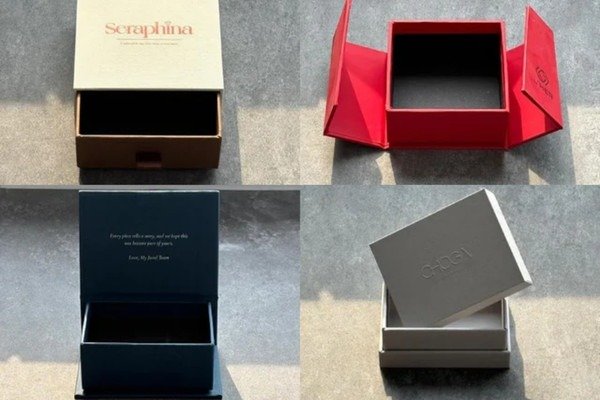
Book-Style Magnetic Box
The book-style magnetic box is one of the most common structures. It opens like a book and closes with magnets on the front flap.
This style is useful for cosmetics, skincare, fragrance samples, candles, watches, electronics, and corporate gifts. It gives a clear opening direction and a strong presentation.
For many buyers, this is the first structure they imagine when they search for magnetic closure boxes. It is clean, easy to understand, and flexible for many product categories.
The main point to check is the product weight. If the product is heavy, we need to check the board thickness, insert strength, and flap support. A weak insert can make the box feel cheap, even if the outside looks good.
Magnetic Flap Gift Box
A magnetic flap gift box usually has a front flap that folds over the front wall. The magnet is hidden inside the flap and box wall.
This style is good for flat or medium-depth products. It can work for proposal boxes, gift cards, scarves, jewelry kits, small candles, and sample sets.
It can look simple and elegant. But the flap position must be accurate. If the magnet is too weak, the lid may open too easily. If the magnet is too strong, the opening feel may become uncomfortable.
The wrapping paper also matters. Thick specialty paper can affect how the flap folds. Soft-touch lamination can give a nice hand feel, but it may show marks if the surface is not protected well.
Magnetic Lid Box
A magnetic lid box can mean different structures in different markets. Some buyers use this phrase for a rigid box with a magnetic top lid. Others mean a book-style rigid box with a magnetic closure lid.
The key question is how the lid should open. Should it open upward, sideways, or like a book? Should the product stay in the base? Should the inner lid have a pocket, card, ribbon, or printed message?
Before production, we always need to confirm the opening direction. Many design mistakes happen because the buyer and factory imagine different lid movements.
Foldable Magnetic Box
A foldable magnetic box is useful for larger gift boxes. It can reduce shipping volume because the box ships flat.
This is helpful for apparel, bedding, corporate gifts, and larger product sets. When freight cost is a big concern, this structure can be a smart option.
But foldable boxes also need more structure control. The magnets, folding panels, tape position, and corner strength must be checked. If the box is very large, we need to balance board thickness, panel strength, and final assembly time.
Here is a simple structure guide.
| Buyer Goal | Suggested Structure |
|---|---|
| Best premium opening feel | Book-style magnetic rigid box |
| Simple small gift packaging | Magnetic flap gift box |
| Better display and clean lid movement | Magnetic lid box |
| Lower shipping volume for large boxes | Foldable magnetic box |
| Heavy product protection | Rigid box with strong custom insert |
| Lower launch budget | Simplified structure or shared size |
In factory work, I do not choose the structure only by appearance. I also check product weight, box depth, insert type, carton packing, and delivery country. These details can change the best solution.
What Materials and Inserts Work Best for Magnetic Closure Boxes?
The best material depends on the brand look, product weight, budget, and order quantity. Common choices include greyboard, printed art paper, specialty paper, soft-touch lamination, anti-scratch lamination, foil stamping, and custom inserts.
For custom magnetic gift boxes, the outer structure usually uses greyboard with printed or specialty wrapping paper. The insert can be paperboard, EVA, EPE foam, flocked plastic, molded pulp, or paper-wrapped board. For premium products, I usually suggest matching the insert to the product weight and brand level, not only choosing the lowest price.

Outer Paper and Surface Finish
The outside paper decides the first impression. A simple printed paper can look clean. A textured paper can feel more natural or luxury. A black specialty paper can create a premium look without full printing.
For beauty and fragrance brands, soft-touch lamination is popular. It gives a smooth matte feeling. But for deep black boxes, I often suggest anti-scratch or anti-fingerprint lamination. Black surfaces show marks more easily than light colors.
Foil stamping can make the logo stand out. Embossing or debossing can add depth. Spot UV can add contrast on matte paper. For thin logo lines, foil or spot UV may be better than blind debossing.
Good packaging is not about adding every finish. Too many finishes can make the design look busy. A simple matte box with one clear logo effect can often look more expensive.
Insert Options
The insert is very important because it controls how the product sits inside the box.
A beautiful outer box can fail if the insert feels loose or cheap. The product should not shake too much. It should also be easy for the customer to remove.
| Insert Type | Best For | Cost Level | Factory Comment |
|---|---|---|---|
| Paperboard insert | Light products, eco look | Low to medium | Good for simple shapes |
| Paper-wrapped greyboard insert | Premium sets | Medium | Strong and clean |
| EVA insert | Jewelry, electronics, heavy items | Medium to high | Precise but can be costly |
| EPE foam with paper wrap | Gift sets, heavier items | Medium | Good cost-performance |
| Flocked plastic tray | Beauty, fragrance, tools | Medium | Clean display but needs tooling |
| Molded pulp | Eco projects, large volume | Medium to high | Tooling cost is not ideal for small MOQ |
For a small launch, I usually suggest a practical insert first. A paper insert or paper-wrapped support can be enough for light items. EVA or molded pulp may look attractive, but the cost can be hard to accept at low quantity.
Board Thickness
Board thickness affects strength and hand feel.
For many rigid boxes, 2.0 mm greyboard is common. For larger boxes or heavier products, 3.0 mm board may be better. But thicker board also increases weight, material cost, and sometimes freight.
The right choice depends on box size and product weight. A small jewelry box does not need the same board thickness as a large candle set. A heavy bottle set needs more support than a lightweight scarf box.
I always prefer to check product dimensions and product weight before suggesting board thickness. It is risky to quote only from a reference photo.
How I Usually Guide a Buyer
If the buyer is testing the market, I may suggest a simpler magnetic closure gift box first. We can use a shared size, one insert style, and one main finish. This keeps the first order more manageable.
If the buyer already has a premium product and clear retail plan, I may suggest a more custom structure. This can include soft-touch lamination, foil logo, paper-wrapped insert, ribbon pull, or a foldable structure for freight saving.
For logo production, vector files are much better than screenshots. They help the factory check foil stamping, embossing, debossing, and printing details more accurately.
For very low quantity, I will be honest. A fully custom magnetic rigid box may not be the best starting point. In that case, a stock box, printed sleeve, sticker, or simpler folding carton may help the brand launch first.
When the quantity grows, the custom magnetic box becomes more reasonable. The tooling and setup cost can be spread across more units. The buyer also has more confidence in the product size, product mix, and customer response.
Conclusion
Magnetic closure boxes are best when the product needs a premium look, better protection, and a stronger opening experience. Send your product size, weight, quantity, reference photo, logo artwork, and delivery country. I can help check the structure and suggest a practical factory-side solution.