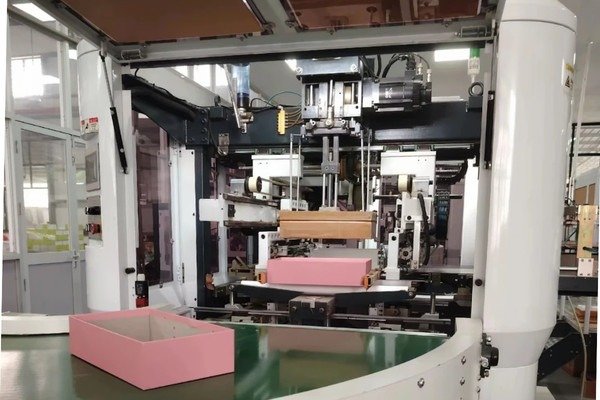
Many buyers ask me why custom gift boxes with logo need MOQ. I understand this question. For a startup, every box feels like cash sitting on the shelf.
MOQ matters because custom gift boxes with logo are made on a production line, not like one pizza made in a small kitchen. The factory needs to prepare molds, paper, printing, workers, inserts, and packing steps before production starts. These setup costs are almost the same for 100 boxes or 1,000 boxes, so very small quantities make each box much more expensive.
So before we talk about a lower price, we need to understand what MOQ really means.
What Does MOQ Mean for Custom Gift Boxes with Logo?
MOQ looks like a simple number, but it connects to the full production system behind the box.
MOQ means minimum order quantity. For custom gift boxes with logo, it is the smallest quantity a factory can produce in a practical way. It helps the factory cover fixed setup costs, run materials efficiently, arrange workers, and control quality. MOQ is not only a sales rule. It is a production rule connected to molds, printing, assembly, inserts, and shipping.
MOQ is not only a number
When a buyer asks for 50 custom gift boxes with logo, the request sounds simple.
But from the factory side, the box is not only “50 pieces.” It is one full production project.
We need to check the box size, structure, paper type, board thickness, logo method, insert, carton packing, and delivery plan. Even before mass production, someone must review the design and confirm if it can be made safely.
That is why minimum order quantity exists.
It helps the project reach a quantity where production time, material waste, and setup work can be shared across enough boxes.
Why MOQ is different from stock packaging
Stock packaging is already made. The size, paper, color, and structure are fixed.
Custom packaging is different. It needs new setup work before the first box is finished.
| Packaging type | How it works | MOQ pressure |
|---|---|---|
| Stock gift box | Existing size and color | Lower |
| Stock box with sticker | Existing box plus simple branding | Lower |
| Custom sleeve | Custom print on a simpler part | Medium |
| Fully custom rigid box | New size, paper, logo, and insert | Higher |
| Luxury logo boxed set | Custom box, insert, foil, and assembly | Higher |
For a logo boxed gift set, MOQ becomes more important because the box is part of the product value.
The box must protect the item. It must look clean in photos. It must open smoothly and hold the product in the right place.
Why factories cannot ignore MOQ easily
Some buyers think MOQ means the factory does not want to support small brands.
That is not the real reason.
The real reason is that the factory needs a stable batch to produce correctly. A custom rigid box needs material purchasing, cutting, wrapping, gluing, pressing, drying, and quality checking.
Each step needs workers and planning.
If the quantity is too low, the factory still spends time on the same preparation. But the total number of boxes is too small to absorb that work.
So MOQ protects both sides. It protects the factory from losing control of production cost. It also protects the buyer from getting a box price that makes no business sense.
Why Can’t a Factory Make 50 Boxes Like a Small Kitchen Order?
This is the part many startup founders feel most confused about. The pizza example makes it easier.
Custom rigid box production is closer to a pizza production line than a home kitchen. In a kitchen, one pizza can be changed quickly. In a factory line, every size, material, topping, label, and carton must be planned before the line starts. Custom gift boxes with logo work the same way. Small changes still require setup, scheduling, and quality control.
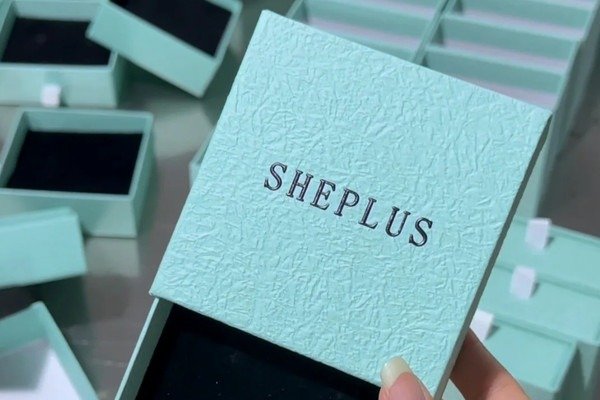
One pizza versus a production line
If you make one pizza at home, you can change everything easily.
You can add more cheese. You can remove olives. You can make it round, square, or small.
But a frozen pizza factory is different.
It needs fixed dough size, fixed topping weight, fixed machine speed, fixed packing film, and fixed cartons. The factory cannot stop the full line for every small custom request.
Rigid box manufacturing is similar.
We are not making one handmade gift box on a kitchen table. We are arranging a production line for paper, board, glue, printing, cutting, wrapping, and packing.
Why one small change can affect many steps
A small change may look simple from the buyer side.
For example, changing a box size by 5 mm may sound easy. But it can affect the outer paper, greyboard cutting, insert size, dieline, carton packing, and shipping volume.
Changing the logo from printing to foil also affects the process. It may need a foil plate, pressure test, temperature control, and extra checking.
| Buyer request | Factory impact |
|---|---|
| “Can we make it 5 mm taller?” | New dieline and insert check |
| “Can we add foil logo?” | Foil plate and pressure test |
| “Can we make only 80 pcs?” | Same setup, fewer boxes to share cost |
| “Can we make 5 SKU colors?” | More paper control and sorting |
| “Can we add a fitted insert?” | Product fitting and cutting test |
This is why very low quantity is hard for custom gift boxes with logo.
The factory is not only asking for more pieces. The factory is trying to make the production line stable.
Why handmade samples are not the same as mass production
A sample can be made by hand. It can look close to the final box.
But mass production is different. The factory must repeat the same box hundreds or thousands of times.
That means the process must be stable.
The logo must sit in the same position. The lid must close correctly. The insert must fit the product. The paper edge must wrap cleanly. The cartons must protect the boxes during shipping.
One handmade sample does not prove that 1,000 boxes can be made smoothly.
This is also why sample cost is high. A sample carries design checking, material testing, handwork, and shipping.
For a startup, this can feel painful. But it is safer than skipping the test and making a full batch with mistakes.
Where Does the Cost Go in a Low-Volume Logo Boxed Project?
Many buyers think small-quantity packaging is expensive because the material is expensive. Usually, that is only one part.
In a low-volume logo boxed project, the cost goes into molds, printing setup, foil or deboss plates, hand assembly, insert fitting, quality checking, and shipping volume. The paper itself may not be the main cost. The real issue is that fixed costs are divided by fewer boxes, so each box carries a larger share of the setup cost.
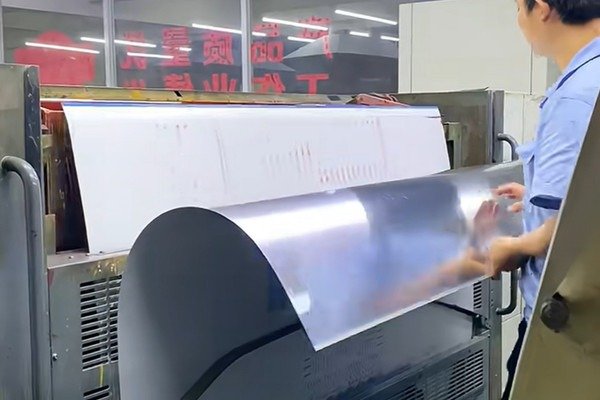
Fixed costs are the hidden part
For custom gift boxes with logo, many costs happen before the box becomes a finished product.
The factory may need a die-cut mold, printing setup, foil plate, deboss plate, sample adjustment, insert test, and carton plan.
These are not raw material costs. They are preparation costs.
If the order is 100 boxes, these costs are divided by 100. If the order is 1,000 boxes, these costs are divided by 1,000.
That is why the unit price drops when quantity increases.
A simple cost table
The table below shows why small quantity can feel expensive.
| Cost area | What it includes | Why it affects small orders |
|---|---|---|
| Structure setup | Dieline, mold, size checking | Same work for small or large runs |
| Printing setup | Color setup, machine trial, paper waste | Low quantity cannot absorb waste well |
| Logo finish | Foil, emboss, deboss, spot UV | Plates and tests add fixed cost |
| Hand assembly | Wrapping, gluing, pressing, QC | Rigid boxes need skilled labor |
| Insert fitting | EVA, EPE, paper tray, velvet support | Product fit needs testing |
| Freight volume | Carton size, volume weight, destination | Rigid boxes take space |
This is the reason I often say small-batch packaging is not expensive only because of paper.
It is expensive because the production system has to start.
Printing and logo setup can be a big part
For colorful artwork, the factory may use offset printing. This is good for stable color and large production.
But it needs setup. It also creates paper waste during color adjustment.
For luxury boxes, buyers may ask for foil, embossing, debossing, or spot UV.
These logo methods can look beautiful. But each method adds tooling, testing, and checking.
A thin logo line may not work well with foil. A blind debossed logo may be too subtle on light paper. A large foil area may need more pressure control.
So the factory does not only quote a logo. The factory checks if the logo can be produced cleanly.
Inserts are easy to underestimate
The insert is one of the most important parts of a logo boxed gift set.
It decides whether the product sits well, moves during shipping, or looks premium when opened.
For jewelry, cosmetics, candles, electronics, and gift sets, the insert may cost more than buyers expect.
EVA can give strong support. EPE with paper wrap can balance cost and appearance. Paperboard inserts can work well for light products. Velvet or flocked inserts create a softer luxury look.
Each insert choice affects MOQ, labor, and total cost.
How Does MOQ Affect Unit Price and Launch Budget?
MOQ is not only a factory issue. It also affects the buyer’s cash flow, inventory risk, and launch plan.
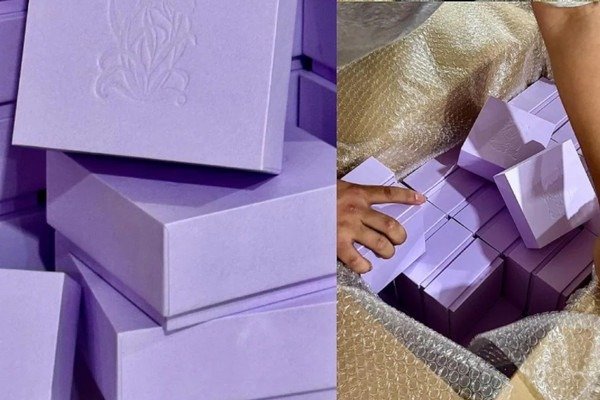
MOQ affects unit price because fixed costs are spread across the order quantity. A lower MOQ usually means a higher unit price. A higher quantity usually gives a better unit price, but it also creates more inventory risk. For startups, the best choice is not always the cheapest unit price. It is the safest balance between launch budget, packaging quality, and expected sales.
Lower MOQ does not always mean lower risk
Many startup founders search for low MOQ because they want to reduce risk.
That is reasonable. No one wants to buy too much packaging before sales are proven.
But low MOQ has another side. It usually raises the unit price.
So the buyer may save total cash at the beginning, but the box cost per product becomes higher. This can hurt margin if the retail price is not high enough.
That is why MOQ planning needs both sides.
You need to protect cash flow. You also need to protect product margin.
MOQ and unit price are linked
Here is a simple example.
| Quantity | Setup cost share | Unit price feeling | Inventory risk |
|---|---|---|---|
| 100 pcs | Very high per box | Highest | Lowest stock risk |
| 300 pcs | Still high | High | Low to medium |
| 500 pcs | More balanced | Better | Medium |
| 1,000 pcs | Lower per box | Much better | Higher stock risk |
This is not an exact quote. It is a way to understand the logic.
The best quantity depends on the product price, launch plan, storage space, and expected sales speed.
Reddit founders often get stuck here
Many Reddit startup discussions show the same problem.
The founder wants custom packaging for a first launch. The supplier gives an MOQ. The founder then feels the MOQ is too high.
Behind this problem, there are usually three concerns.
First, the founder does not want to tie up too much cash. Second, the founder does not know how fast the product will sell. Third, the founder wants the packaging to look premium from day one.
These concerns are real.
But premium custom gift boxes with logo and very low launch quantity often fight each other.
A luxury box needs structure, finish, insert, and careful assembly. A low-volume launch needs flexibility and lower cash pressure.
The solution is not always “find the lowest MOQ.” A better solution is to design the first packaging stage wisely.
Shipping volume affects budget too
Many buyers forget freight when they compare unit price.
Rigid boxes are bulky. They may be light, but they take space. Shipping companies may charge by dimensional weight, not only real weight.
This matters for air freight and courier delivery.
A box that looks affordable at the factory may become costly after shipping. A non-foldable rigid box can take much more volume than a foldable rigid box.
For some projects, foldable structure can reduce shipping pressure. For other projects, a standard box with a sleeve may be more practical.
So MOQ planning should include shipping, not only production price.
How Can Startups Reduce MOQ Pressure Without Cheapening the Box?
A startup does not always need the most complex custom box in the first launch. It needs the right packaging stage.
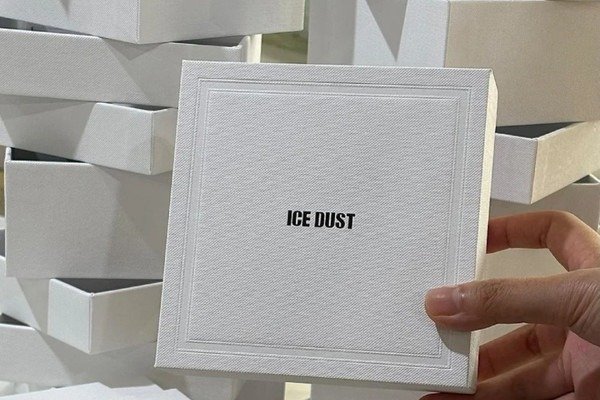
Startups can reduce MOQ pressure by using standard structures, choosing a shared box size, adding custom sleeves, limiting SKU colors, simplifying logo finishes, and testing with samples first. This does not mean the box must look cheap. It means the packaging should match the brand’s current sales stage and cash flow.
Use a standard structure first
A standard box structure can reduce pressure because the factory already understands the production method.
For example, a simple lid-and-base box or magnetic box may be easier than a special shape.
The brand can still use good paper, clean printing, or a nice logo finish. But the structure does not need to be too complicated at the beginning.
This is often a good choice for beauty, jewelry, candles, and small gift sets.
Use sleeves for SKU flexibility
A printed sleeve is one of the most useful tools for startups.
The main box can stay the same. The sleeve can show the product name, scent, color, size, or seasonal message.
This helps brands avoid making many different boxes too early.
| Startup problem | Better packaging solution |
|---|---|
| Many SKUs | One shared box plus different sleeves |
| Small first launch | Standard box plus logo sleeve |
| Tight cash flow | Fewer finishes and cleaner structure |
| Unsure sales speed | Start with flexible branding |
| Premium look needed | Better paper and simple logo finish |
A sleeve can still look premium if the paper, print, and fit are done well.
It also helps when the brand wants to change artwork later.
Simplify the logo finish
For the first order, I often suggest keeping the logo finish practical.
A one-color printed logo, foil logo, or sleeve may be enough.
If the brand chooses foil plus embossing plus full printing plus velvet insert, the cost and MOQ pressure will rise quickly.
That does not mean these finishes are wrong. They can be excellent for mature brands.
But for a first launch, the finish should support sales, not create unnecessary cost pressure.
Start with the product information
The best way to reduce MOQ pressure is to give the factory clear information early.
I usually ask for product size, product weight, target quantity, reference photo, logo artwork, delivery country, and launch date.
With this information, I can check the project from the factory side.
Maybe the buyer needs a full custom rigid box. Maybe a sleeve is enough. Maybe the insert should be paperboard instead of EVA. Maybe the structure should be foldable to reduce freight.
A good factory-side check can save money before the sample stage.
It can also prevent the buyer from choosing a packaging idea that looks nice online but is not realistic for the budget.
Conclusion
MOQ matters because custom gift boxes with logo are made through a production line. Small quantities carry higher setup cost per box. Send your product size, target quantity, reference photo, logo artwork, and delivery country. I can check the right structure, material, insert, and cost direction.