Should brands replace EVA foam inserts with molded pulp or paperboard because of the EU PPWR? Not automatically. PPWR does not impose a general ban on EVA foam inserts in rigid gift boxes. But the material and structure of an insert affect packaging composition, possible separation, weight, end-of-life handling and the evidence a buyer needs. The right replacement must also hold the product securely through packing, shipping and unboxing.
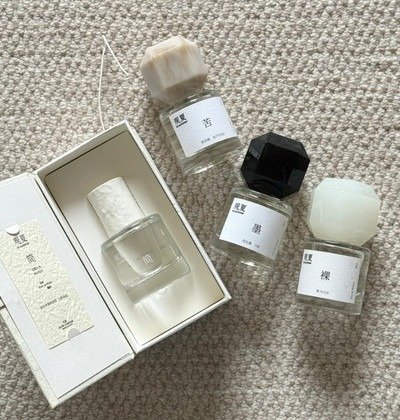
Imagine a premium fragrance brand switching a precisely cut EVA tray to paperboard to reduce plastic-based components. The new tray looks attractive in a photograph, but the bottle rotates during delivery and rubs against the lid. The cheaper or simpler material has created a potentially more expensive damage problem.
The useful question is not “Which insert sounds greener?” It is “Which insert meets the protection, brand, manufacturing and documentation requirements of this exact product?”
What Does PPWR Change About Rigid Box Inserts?
Short answer: PPWR shifts attention to the complete packaging structure. Under Article 6 and Annex II, material composition, combinations and separability are among the considerations for recyclability assessment; Article 10 brings phased packaging minimisation requirements. An EVA insert is not automatically prohibited, and a paper insert is not automatically compliant.
The regulation generally started applying in August 2026. Major design-for-recycling requirements are scheduled for 2030 or later, subject to the delegated-act timing set out in Article 6. The relevant EU source is Regulation (EU) 2025/40.
For buyers, a good preparation step is to document every component: structural board, wrap, magnets, insert, lining and other additions. HiPack's existing PPWR rigid-box design guide provides the overall regulatory context; this article deals specifically with insert selection.
EVA Foam, Molded Pulp or Paperboard: What Is the Real Difference?
Short answer: EVA is useful when precise cavities, soft cushioning and a polished presentation matter. Molded pulp can create shaped paper-based support, usually with tooling and surface-finish trade-offs. Die-cut or folded paperboard can offer efficient, lower-complexity support for suitable product geometries. None should be chosen on material name alone.
| Factor | EVA foam insert | Molded pulp / molded fibre | Folded or die-cut paperboard |
|---|---|---|---|
| Typical strength | Precise cutouts and cushioning | Formed three-dimensional support | Lightweight structural positioning |
| Presentation | Smooth, often covered with fabric or flocking | Natural or refined moulded appearance, depending on process | Clean graphic or architectural look |
| Development need | Die cutting, foam grade and cavity design | Mold design, draft angles, tooling and tolerances | Cutting/creasing design and assembly trials |
| Protection issue to test | Compression, recovery, surface contact | Dimensional fit, abrasion, moisture response | Crease strength, movement and deformation |
| Data question | Foam polymer and component weight | Fibre source, finish, weight and any added treatments | Board grade, printing/coatings, adhesives and weight |
| Typical commercial constraint | Material/fabric complexity | Tooling economics and finish expectations | Assembly labour and geometry limits |
Important: Molded pulp is not automatically the lowest-cost choice, especially for small volumes that require a new dedicated mould. Paperboard can be efficient, but an intricate design may increase hand assembly. Actual prices depend on size, complexity and order quantity.
Which Insert Is Best for Glass Perfume Bottles?
Short answer: Start with the product's weight, shape, contact points and shipping route—not with the material. A glass bottle needs controlled movement, reliable support at stronger areas, sufficient clearance from the lid and protection against impact and cosmetic abrasion. Any alternative insert must pass the same product-specific checks.
For a glass perfume bottle, review:
- Neck and shoulder clearance: Do not create concentrated pressure on a fragile pump or cap.
- Bottom support: Prevent the bottle from dropping or rotating inside the cavity.
- Side restraint: Avoid lateral movement during transport.
- Surface contact: Check whether the insert scuffs printed glass, labels or coated caps.
- Removal experience: A product that is difficult to extract may damage the packaging or feel disappointing to the customer.
An EVA insert may offer precise contact geometry. Molded fibre can work well when its geometry, surface and moisture tolerance fit the product. A folded-board cradle can be effective when load paths are well designed. These are candidates for testing, not pre-approved winners.
What transport testing is appropriate?
A sample shaken by hand is not a transport-validation plan. Depending on the distribution route, buyers can consider protocols such as ISTA's published test procedures, including parcel-distribution simulation where relevant. Testing should evaluate the complete packaged product in its intended shipping configuration, not only the decorative presentation box in isolation.
Can Molded Pulp Still Look Premium?
Short answer: Yes, depending on the forming process, tooling, fibre formulation, colour, finish and geometry. But a typical molded-fibre tray may not reproduce the perfectly smooth velvet-lined cavities or extremely sharp decorative edges of a premium EVA insert. The achievable finish should be verified on a physical sample.
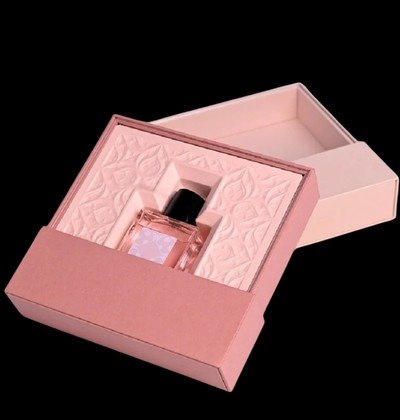
For beauty and jewellery projects, ask:
- Will the insert be visible immediately when the lid opens?
- Does the colour need to match a brand Pantone reference, or is a natural-fibre appearance acceptable?
- Are visible fibres, draft angles or rounded corners acceptable?
- Is the product touching delicate plated metal, polished glass or varnished components?
- Are any coating, flocking or adhesive layers being added to create the desired appearance?
A fiber-based insert covered with plastic film or bonded fabric may have a very different end-of-life profile from an uncoated fiber insert. Paper-based does not mean automatically mono-material.
Are Velvet-Covered EVA and Multi-Layer Inserts Harder to Assess?
Short answer: They are more complex to describe and potentially to separate, because the finished component may contain foam, fabric or flocking, adhesive and sometimes board. PPWR does not automatically prohibit those combinations, but buyers should document them instead of reporting the entire insert simply as “paper” or “foam.”
Consider a jewellery insert with a foam base, velvet surface and ribbon tab. The buying specification should identify those layers. If the factory proposes a paperboard replacement with a fabric lining, that can improve some design factors without eliminating all mixed-material questions.
The practical choice may still favour a protected textile-lined insert for a high-value product. What matters is making that choice deliberately and gathering suitable component information. HiPack's PPWR supplier documentation guide explains what to request before production.
A Buyer Decision Matrix by Product Type
Short answer: The same insert material should not be applied to every product category. Select one or two credible candidates, then compare actual handling and protection against the desired presentation.
| Product scenario | Strong options to evaluate | What could go wrong | Minimum approval evidence |
|---|---|---|---|
| Glass perfume bottle | EVA, formed fibre, engineered board cradle | Bottle movement, cap pressure, glass scuff | Fit, extraction, distribution tests |
| Fine jewellery | Paperboard holder, protective covered insert, EVA | Scratched finish, weak clasp/chain retention | Surface-contact and handling checks |
| Skincare kit with several items | Folded card, molded fibre, mixed structure | Components collide or shift | Loaded assembly and transport check |
| Compact electronics | Engineered paperboard, formed fibre, EVA | Edge impact, insufficient crush protection | Shock, vibration and support assessment |
| Presentation-only PR gift | Lightweight paperboard or formed fibre | Low perceived value or poor display | Visual/sample approval and shipping route |
For the wrapping paper and greyboard behind these tray constructions, see Choosing Paper and Greyboard for Rigid Boxes Under PPWR.
Does a Plastic-Free Insert Guarantee PPWR Compliance?
Short answer: No. “Plastic-free” describes the absence of certain materials, not the completed conformity assessment. A paperboard insert can still carry inks, varnishes, adhesive or laminated surfaces; the entire packaging may also contain magnets, windows or other components.
The 4evergreen Circularity by Design Guideline provides practical industry considerations for designing paper-based packaging that is easier to collect, sort and recycle. It is useful for design questions but is not an official PPWR certificate.
Also, replacing EVA with fibre while increasing the outer box dimensions or adding unnecessary spacers may undermine packaging-minimisation goals. Review total material mass and functional performance together.
How to Approve an Insert Replacement Before Mass Production
Short answer: Treat the new insert as an engineering change. Use the same real product, the same external box dimensions where feasible and the same intended distribution route. Compare at least two candidate designs before approving a new production specification.
Step 1 — Define the original failure risks. Is the priority drop protection, anti-scuff contact, presentation or faster packing?
Step 2 — Confirm the product. Share exact dimensions, tolerances, mass, surface finish, fragile points and any accessory arrangements.
Step 3 — Prototype competing designs. Verify fit with the actual product, not an approximate 3D shape.
Step 4 — Check the complete packaging system. Include outer shipping carton, orientation and any additional protective packaging.
Step 5 — Approve the data. Record insert material, individual weight, drawings, version and relevant declarations or test results before mass production.
A short packaging brief can prevent weeks of unusable samples. Good inputs include product photos, the loaded weight, current insert photo, annual volume, destination markets and target presentation level.
FAQ: Rigid Box Inserts and PPWR
Is EVA foam prohibited under EU PPWR?
No general PPWR ban applies to EVA foam rigid-box inserts. The complete packaging must still be assessed against applicable requirements.
Is molded pulp automatically recyclable?
Not necessarily. Its coatings, contaminants, bonded materials and intended recycling route matter. Ask for evidence suited to the final construction.
Is paperboard cheaper than EVA?
Not always. Materials, design complexity, setup, assembly and volume can change the result.
Can paper inserts protect glass bottles?
They can in suitable engineered designs, but the actual product and distribution packaging should be tested.
Should a buyer remove velvet from every jewellery box?
No automatic ban requires that. Determine whether the lining is functionally important and document the material combination.
What evidence should I ask from the factory?
A component BOM, material specifications, weights, approved drawing, revision details and relevant test or supplier evidence.
Protect the Product First. Simplify the Insert Where It Makes Sense.
Replacing an insert is successful only when the product still arrives safely, the unboxing still feels right and the resulting structure is easier to manage.
If you want to review an existing EVA, molded-pulp or paperboard insert, send HiPack a product photo, accurate product dimensions and weight, current box/insert photos, destination market and planned quantity. We can compare practical structures and identify which options warrant physical sampling and performance validation.
Discuss Your Insert and Rigid Box Structure With HiPack
If the insert redesign changes the outer presentation, also read PPWR and Luxury Rigid Box Finishes before approving the final artwork.