You want a premium rigid box that feels substantial, protects your product and looks right for your brand. Now your EU team is also asking whether the paper is recycled, whether the board is unnecessarily heavy and whether the packaging can be supported by reliable material information.
Here is where we recommend starting: use a suitable rigid greyboard for strength, then choose the wrapping paper for the appearance you want. For a conventional wrapped gift box, a documented recycled-fibre greyboard is often a practical starting point. There is no need to pay for a different core material simply because the box is positioned as luxury. What matters is whether the finished box performs as required.
PPWR does not mean every rigid box must use the thinnest board, contain a fixed percentage of recycled paper or carry an FSC logo. It means packaging decisions need to make sense technically, and the applicable requirements need supporting evidence.
First, What Should You Actually Specify?
A wrapped rigid box usually has two main paper-based parts: the greyboard core, which gives the box its shape and strength, and the wrapping paper, which creates the visible finish. Treating them as separate decisions makes sourcing much easier.
| Your packaging goal | Sensible starting point | What to check before approval |
|---|---|---|
| White perfume or beauty box with detailed printing | Consistent greyboard core + smooth white printable paper | Brand colour, scuffing, corner folds |
| Natural brown gift box | Greyboard core + kraft-style wrapping paper | Print contrast and colour expectations |
| Black jewellery box with subtle branding | Greyboard core + black specialty paper, with printed black as a comparison | Visible scratches, fold marks, shade consistency |
| Textured luxury presentation box | Greyboard core + suitable textured paper, optionally with debossing or local foil | Surface durability and finishing quality |
| Large box or heavy glass product | Stronger board and a properly designed insert | Wall distortion, lid fit and shipping protection |
These are starting recommendations, not guaranteed constructions. A factory should confirm the final specification on an assembled sample containing the actual product.
Recycled Greyboard or Virgin-Fibre Board: Which Should You Choose?
For most fully wrapped rigid boxes, start by evaluating a suitable recycled greyboard. Because the core is hidden by the outer paper, the board's natural grey colour usually does not affect the luxury appearance. What matters most is consistent thickness, flatness, stiffness and reliable converting performance.
A recycled-fibre board does not automatically mean lower quality. For example, Eska publishes recycled solid-board specifications for premium packaging, including board thickness, weight and stiffness. This shows that recycled-fibre board can be made to defined technical standards; it does not prove that every recycled board performs equally or that HiPack uses that particular grade.
When would we choose something else? If the core is visible, a white or coloured board may be more suitable. If the board itself needs direct high-quality printing, choose a board designed for that print application. And if a heavy product causes the completed box to deform, move to a stronger board grade or adjust the structure.
The buying decision: Do not pay for a different fibre type on appearance grounds when the core is completely covered. First ask whether the proposed board meets the finished-box specification.
Is 2 mm or 2.5 mm Greyboard Better?
Neither is universally better. 2 mm is worth testing when reducing material is a priority; 2.5 mm is a reasonable comparison when the box needs greater rigidity. The right choice depends on box size, height, product weight, insert support and how the box will be handled.
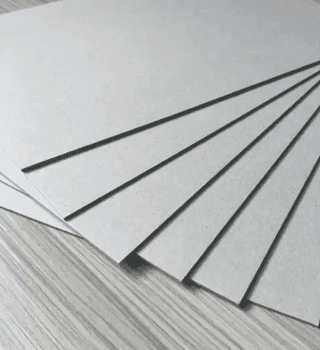
Here is a real example from the published specifications of the same Eska board range:
| Published board data | 2.0 mm | 2.5 mm |
|---|---|---|
| Board weight per square metre | 1,260 g | 1,575 g |
| Machine-direction bending stiffness | 1,655 mNm | 2,920 mNm |
Source: Eska Board technical data.
In that particular board range, the 2 mm sheet uses 20% less material by weight per square metre than the 2.5 mm sheet. But it is also substantially less stiff. This does not mean a complete rigid box becomes 20% lighter or that the thinner finished box will pass the same protection tests. Wrapping paper, inserts, glue and other components also contribute to total weight.
So what should a buyer do?
For a compact jewellery or accessory box, ask the factory to compare both thicknesses using the same dimensions, wrap and insert. If the 2 mm finished box keeps its shape, closes properly and protects the product during the agreed checks, it may be the better use of material.
For a tall presentation box, heavy glass gift set or box that must tolerate significant handling or stacking, the stronger construction may be justified. If the 2 mm version bends, the lid becomes loose or the corners distort, do not approve it just because it is lighter.
A useful rule: select the lightest construction that meets the agreed performance requirements—not the thinnest board on a material chart.
Which Wrapping Paper Gives the Best Result?
This is where the box gets its character. The wrapping paper usually matters more to the customer's first impression than the colour of the hidden greyboard.
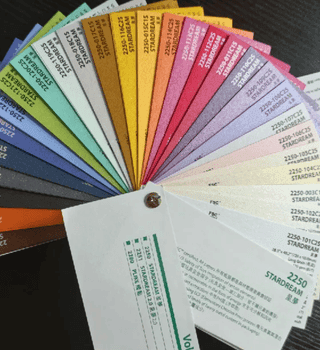
For detailed artwork and accurate colours, start with a smooth, consistent white printable paper. It gives a more predictable basis for complex graphics and light colours than a brown or deeply coloured sheet. Approve a printed, wrapped sample rather than relying on a digital mock-up.
For a natural, understated look, try kraft-style paper with restrained printing. It works well when the desired appearance is genuinely brown and earthy. It is not the best first choice when the brand requires clean pastels, bright white or precise photographic colour.
For quiet luxury, try a suitable textured or through-coloured specialty paper with debossing or a small foil logo. This can create a rich finish without covering the entire surface in decorative layers. But check rubbing, fold marks and colour consistency: premium paper can still be sensitive to handling.
Consider a black jewellery box. A black specialty-paper wrap may give a beautiful tactile finish, while a printed black wrap may offer a different balance of colour control and abrasion resistance. Ask to see both as finished boxes, and select the one that looks better after realistic handling—not merely the one that looks better in a paper swatch book.
Does PPWR Require FSC Paper or Recycled Greyboard?
No. PPWR does not impose a blanket FSC requirement or one universal recycled-fibre percentage for paper rigid boxes. A retailer or brand may require FSC certification as its own sourcing policy, but that is different from the packaging regulation.
It helps to keep three questions separate:
- Where did the fibre come from? FSC sourcing and chain-of-custody claims address this question.
- Was recycled fibre used? The board supplier's material declaration, or an applicable certified claim, may help establish this.
- Can the finished box be recycled? That depends on the complete structure, including finishes, adhesives, magnets and inserts—not the outer paper alone.
The Forest Stewardship Council explains the difference between FSC 100%, FSC Mix and FSC Recycled. FSC 100% concerns fibre from certified forests; FSC Mix permits eligible combinations of certified, reclaimed and controlled sources; FSC Recycled concerns verified recycled input. FSC Mix does not, by itself, tell you an exact recycled-fibre percentage.
If you want an FSC logo printed on the finished box, confirm that the finished-product supplier and the specific product claim qualify. FSC's on-product labelling instructions explain why buying FSC-related paper is not enough to print the logo without the required certified process.
PPWR has other requirements too. For instance, Regulation (EU) 2025/40 sets recycled-content targets for specified plastic packaging or plastic components under Article 7; those are not a blanket recycled-fibre quota for greyboard. Its main Article 10 packaging-minimisation provisions apply from 1 January 2030. Planning a lighter, better-documented box now is sensible, but do not describe future requirements as already fully in force.
For the wider evidence expected from a packaging supplier, see HiPack's PPWR supplier documentation checklist.
Is Black, Coated or Textured Paper Automatically Non-Recyclable?
No. But it would be equally wrong to promise that every paper-wrapped rigid box is recyclable. Colour and texture alone cannot answer the question. The full packaging structure matters.
For example, a rigid gift box may contain greyboard, printed wrap, plastic lamination, magnets and a foam insert. Calling that entire package “100% paper” would be misleading, even though paper makes up much of its structure.
A more useful approach is to record the components and review the actual design. If a coating or film adds little value, compare an unlaminated alternative. If a magnet or protective insert is necessary, document its function rather than assuming it is banned. Industry guidance such as 4evergreen's Circularity by Design resources can help with fibre-packaging design choices, but it is not an official PPWR compliance certificate.
For the wider implications of magnets, foam and other components, read PPWR and Rigid Boxes: Materials and Design Explained.
How Should You Approve a New Paper or Board?
There is one mistake we would avoid: approving a material change from a flat paper sample alone. You need to see what happens when the paper is wrapped around the corners and the completed box is used with the real product.
Ask for two comparable finished samples if you are deciding between a current design and a lighter or simpler alternative. Keep the size, insert and artwork the same so that you can judge the actual change.
Then check four things:
- Appearance: Does the colour match? Are corners clean? Are scratches or paper cracks visible?
- Function: Does the lid fit? Does the box retain its shape through normal opening and handling?
- Protection: Does the box and insert protect the real product under the agreed shipping and handling conditions?
- Documentation: Are the approved paper grade, board grade, box weight and relevant sourcing claims recorded?
If the lighter option passes, you have a justified basis for choosing it. If it fails, keep the stronger version or revise the structure. There is no universal PPWR rule that all luxury boxes must use 2 mm board, and published sheet stiffness is not a substitute for finished-box testing.
What Should You Send to Your Rigid Box Manufacturer?
You do not need to decide every material before requesting help. A useful first message includes the product dimensions and weight, intended box style, preferred appearance, target quantity and destination country. Share an existing box photo or physical reference if you have one.
Ask your supplier to propose one reliable baseline construction and one practical alternative, with the differences explained in plain English: board thickness, wrap type, finish, estimated or measured sample weight, cost implications and what needs testing.
For more on structures and preparing a packaging project, see HiPack's Custom Rigid Box Packaging Guide.
Frequently Asked Questions
Can recycled greyboard be used for a luxury rigid box?
Yes. A suitable recycled board can form the hidden structural core of a premium wrapped rigid box. Its grade and finished-box performance still need to be approved.
Is 2.5 mm always stronger and therefore the better choice?
A thicker board in the same grade usually offers greater stiffness, but the finished box may not need it. Compare real prototypes rather than selecting thickness on appearance alone.
Is FSC Recycled the same as recyclable?
No. FSC Recycled is a verified recycled-input claim for qualifying materials. Recyclability concerns how the completed package behaves in the relevant collection and recycling system.
Should we avoid plastic lamination under PPWR?
Not automatically. If the finish is needed for durability, evaluate its role and the actual recycling implications. If the same appearance and protection can be achieved with a simpler finish, that is worth testing.
Choose the Box That Works — and Can Be Explained
A good PPWR-related material decision does not require a brand to give up the finish that makes its packaging special. It requires a construction that looks right, protects the product and has documentation that matches the actual box.
For many wrapped rigid boxes, a documented recycled greyboard core plus carefully chosen wrapping paper is a practical place to start. Then refine thickness and finish using real samples, not assumptions.
Working on a new box or reviewing an existing one for the EU market? Send HiPack your product size and weight, preferred box style, target appearance and estimated quantity. We can discuss a baseline material specification and a feasible alternative to compare before sample approval.