Can luxury rigid boxes still use soft-touch lamination, gold foil and specialty finishes under the EU PPWR? Yes. The Packaging and Packaging Waste Regulation (PPWR) does not impose a general ban on these finishes. The real procurement question is whether the complete packaging construction can support the applicable substance, recyclability, documentation and future minimisation requirements—without losing the look, protection and production consistency that made the finish valuable in the first place.
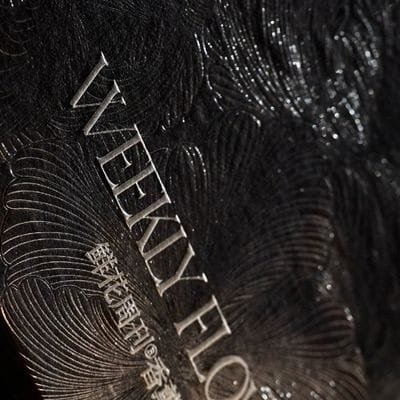
Imagine a perfume brand approving a matte-black magnetic rigid box with a soft-touch surface and gold logo. Its EU sustainability team then asks for a less complex structure. Switching to unlaminated paper sounds straightforward—until the black surface scuffs in transit, the gold logo changes appearance, and the corner folds begin to crack. The problem is no longer simply “film or no film.” It is how to redesign and verify the finish without introducing a new quality problem.
This guide focuses on the choices packaging developers can actually make, rather than repeating general PPWR definitions.
What Does PPWR Actually Say About Rigid Box Finishes?
Short answer: PPWR evaluates packaging as a system. Annex II identifies coatings, inks, lacquers, adhesives, colours, material composition and component separability as relevant parameters for future design-for-recycling criteria. These are factors to assess, not an automatic blacklist of decorative processes.
The EU regulation has generally applied since 12 August 2026, but its detailed recyclability-grade rules are phased in from 2030 or later, depending on the relevant delegated acts. Packaging minimisation under Article 10 also has a key 2030 application date. Buyers should not accept an unsupported claim that a finish is already “official PPWR Grade A” in 2026.
Read the primary legal text: Regulation (EU) 2025/40, especially Article 6 and Annex II. For the current-versus-future timeline, the European Commission's PPWR implementation guidance is also useful.
Is Plastic Lamination Banned on Paper Rigid Boxes?
Short answer: No. Matte BOPP, PET and soft-touch films are not subject to a blanket PPWR ban on rigid boxes. But a film bonded to paper changes the structure being assessed; it can affect fibre recovery, sorting and recycling yields. Whether that combination performs acceptably needs evidence for the specific construction and relevant recycling route.
Films are popular for good reasons: they help protect dark printing, improve rub resistance and deliver a predictable surface across production runs. Removing them can change performance substantially.
For a laminated rigid box, ask your supplier:
- What is the film type and approximate thickness?
- Is the wrap fully laminated or only partially finished?
- Is the film essential for scuff resistance, moisture exposure or brand feel?
- Can the same appearance be achieved with uncoated specialty paper or a suitable coating?
- Is any relevant recyclability assessment available for the actual paper/film/adhesive combination?
A plastic-free surface is a material description, not automatic proof that the complete box is recyclable.
Soft-Touch Lamination vs Water-Based Coating vs Uncoated Paper
Short answer: There is no universally best finish. Lamination may deliver stronger consistency and handling resistance; some coatings or specialty papers may reduce material complexity. The best specification is the one that passes brand appearance, manufacturing and relevant end-of-life assessments together.
| Finish option | Why a brand chooses it | Trade-off to investigate | Sample-approval checks |
|---|---|---|---|
| Soft-touch film lamination | Velvet-like touch and consistent matte appearance | Adds a bonded film layer | Scuffing, fingerprints, fold cracking, paper/film recyclability |
| Conventional matte film | Surface protection and repeatable printed colour | Additional non-paper material | Abrasion, corner adhesion, film identity and weight |
| Water-based matte coating | Matte appearance without a separate film layer | Feel and resistance vary by formulation | Rub, scratch, moisture, coating suitability, recyclability evidence |
| Uncoated textured paper | Tactile material effect without film | Marking, rub and colour limitations | Ink holdout, shade consistency, corner wrapping, handling |
| Embossed specialty paper | Depth and texture from paper surface | Texture can change with folding and print process | Embossing definition, corner cracking, repeatability |
Production example: If the original box uses soft-touch film to protect a large dark solid area, a switch to uncoated paper should first be tested for fingertip marking, dry/wet rub and transit abrasion. A beautiful flat paper swatch is not proof that the assembled box will survive distribution.
Is Gold Foil Stamping Still an Option Under PPWR?
Short answer: Yes. PPWR does not generally prohibit hot foil stamping. What matters is the chosen foil system, how much is applied, the substrate, and the overall packaging's recycling performance. A small logo and a fully metallised decorative surface should not automatically be treated as equivalent designs.
For premium boxes, consider three approaches:
- Keep a restrained foil logo: preserves an established luxury identity while limiting the decorated area.
- Compare metallic ink and foil: these produce different reflectance, coverage and visual quality; test both on the actual paper.
- Use blind embossing or debossing: creates tactile contrast when a metallic appearance is not essential.
Do not promise that a particular percentage of foil coverage is “PPWR approved” without an applicable method and evidence. To understand how paper-packaging design choices affect sorting and recycling, see 4evergreen's Circularity by Design Guideline. This is industry guidance, not a substitute for a legal conformity assessment.
Do Embossing and Debossing Offer a Better Alternative?
Short answer: Embossing and debossing can create premium texture without necessarily adding a separate decorative film. But the result depends on paper type, fibre structure, ink coverage, tool depth and how the sheet is wrapped around rigid-board edges.
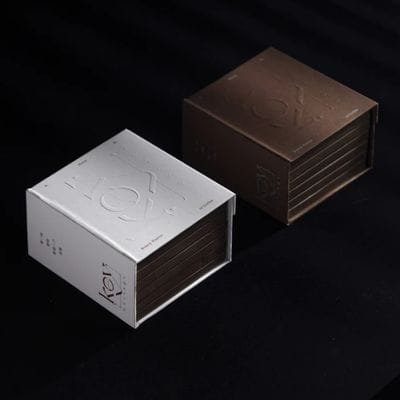
A buyer should not approve embossing from an enlarged digital rendering alone. Ask for a finished-box sample with:
- texture visible under normal retail lighting;
- consistent pattern across the lid, base and corners;
- no cracking in deeply formed areas;
- an acceptable logo edge and alignment;
- no significant loss of colour consistency between sample and bulk specification.
For the paper decisions behind these effects, read Choosing Paper and Greyboard for Rigid Boxes Under PPWR.
What About Spot UV, Inks, Adhesives and Dark Colours?
Short answer: These details matter because they are part of the finished pack, even when their mass is small. PPWR Annex II names colours, inks, lacquers, adhesives and coatings among parameters relevant to design-for-recycling assessments. The impact cannot be judged just from a finish name on a quotation.
Dark-dyed paper, heavy print coverage, specialty inks and multi-layer decorative finishes may present different deinking, sorting or fibre-quality questions. Adhesive behaviour also matters to paper recycling. Buyers should request the material identity and available supporting information for the construction actually supplied.
Where fibre-based recyclability testing is needed, 4evergreen's Recyclability Evaluation Protocol describes industry assessment routes for conventional, flotation-deinking and specialised paper recycling. A positive result under that protocol should not be described as an automatic PPWR conformity certificate.
For the broader evidence file an EU buyer may need, see HiPack's PPWR Supplier Documents Checklist.
A Three-Route Finish Review Before You Redesign
Short answer: Avoid jumping from “current finish” directly to “remove every coating.” Compare a controlled reference and two realistic alternatives, then decide based on an approved appearance, engineering and documentation record.
| Route | Example | Best when | Main approval risk |
|---|---|---|---|
| A. Retain | Matte film + small foil logo | Surface protection and brand consistency are critical | Must document and assess existing material combination |
| B. Simplify | Suitable matte coating + small foil logo | Buyer wants to investigate a film-free structure | Touch, rub and chemical/coating performance may differ |
| C. Rebuild the effect | Textured specialty paper + blind emboss | Tactile branding is more important than laminated feel | Shade, tooling, corner and embossing consistency |
Approval checklist: review the assembled box—not only a sheet sample—for colour, feel, scratch/rub behaviour, adhesive bonds, foil/emboss alignment, corner appearance, protective function, component weight and available material evidence. Record the final revision before ordering bulk production.
What should a brand send a supplier?
Send a photo or sample of the current finish, artwork, target colour, expected handling conditions, box dimensions, annual quantity and destination market. If a material or coating is already approved internally, provide its specification too.
HiPack's general rigid-box packaging guide explains the structural options behind the finish, while our factory-direct custom rigid box page outlines manufacturing and sampling support.
FAQ: PPWR and Luxury Packaging Finishes
Is soft-touch lamination illegal in the EU under PPWR?
No blanket PPWR prohibition applies to soft-touch film on rigid boxes. The finished packaging still needs assessment against applicable requirements and future recyclability criteria.
Is a water-based coating automatically recyclable?
No. “Water-based” describes part of a formulation or process, not the result of a recyclability test for the finished pack.
Is hot foil stamping permitted on luxury paper boxes?
PPWR does not generally ban it. Assess the construction and available recyclability evidence rather than relying on the word “foil.”
Can embossing replace soft-touch lamination?
Sometimes it can replace the desired tactile or visual effect, but not necessarily the protective performance. Side-by-side samples are essential.
Should buyers ask for a PPWR certificate for each finish?
Ask instead for applicable material specifications, component data and relevant evidence supporting the responsible party's compliance process.
Review Your Current Finish Before Paying for a Redesign
Keep what makes the box premium. Question only what the packaging truly needs.
If your EU team is reconsidering lamination, foil, embossing or a soft-touch surface, send HiPack your current box photos, finishing specification, target colour, quantity and intended market. We can compare practical production routes and outline which finish samples or material information should be reviewed before you commit to a new specification.