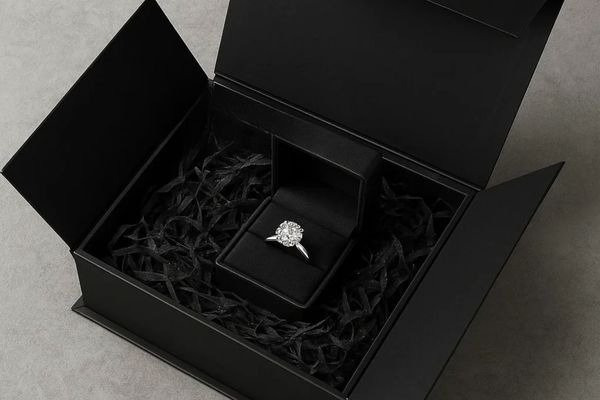
Custom jewelry boxes with logo are not just simple paper gift boxes. For premium jewelry packaging, I usually focus on structure, touch, logo craft, and insert design. A small product can feel much more valuable when the box is built like a proper display case.
Custom jewelry boxes with logo make rings, earrings, necklaces, and bracelets look more premium through custom structure, wrapped materials, logo finishing, and fitted inserts. Standard jewelry boxes can use existing plastic core sizes, and we have many ready sizes to choose from. For more custom dimensions, premium boxes are often made from solid wood layered board cut to size, then wrapped with PU leather, microfiber leather, leather-like material, or specialty paper.
Before I suggest a box, I always look at the jewelry first.
Why Are Premium Custom Jewelry Boxes Different from Simple Paper Gift Boxes?
Jewelry boxes look small, but the structure is more detailed than many paper gift boxes. They must protect, display, and upgrade the product at the same time.
Premium custom jewelry boxes with logo are different from simple paper gift boxes because they are designed around jewelry display. Standard jewelry boxes can use fixed-size plastic cores from existing molds. For custom box sizes and special shapes, we can use solid wood layered board cut to the required dimensions. This gives more freedom for size, hinge design, wrapping material, and insert layout.
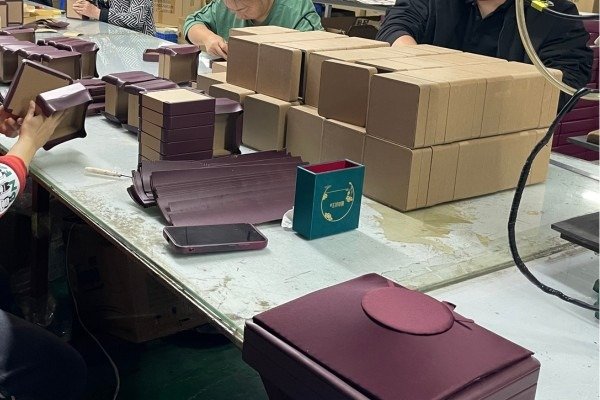
A simple paper gift box is usually made to hold a product. A premium jewelry box is made to present a product. This difference is very important for rings, earrings, necklaces, and bracelets.
For standard jewelry packaging, a plastic core can be a practical choice. The plastic core comes from existing molds, so the size is fixed. We have many different sizes available, which can cover many common ring, earring, pendant, and bracelet boxes.
But when the buyer needs a more exact custom size, a fixed plastic core may not fit well. In that case, a solid wood layered board structure is often a better solution.
Solid wood layered board gives more size freedom
A solid wood layered board structure can be cut to match the product size. This helps when the jewelry needs a special box shape, a deeper insert area, or a more premium hand feel.
For example, a ring box may need a compact square shape. A necklace box may need a longer inner space. A bracelet box may need more depth and stronger side support.
| Box Type | Main Structure | Best Use |
|---|---|---|
| Simple paper gift box | Paperboard or greyboard | General gifts and lower-cost packaging |
| Standard jewelry box | Existing plastic core size | Common rings, earrings, and pendants |
| Premium custom jewelry box | Solid wood layered board cut to size | Custom dimensions and premium jewelry |
| Luxury display jewelry box | Wood layered board + premium wrap + fitted insert | Fine jewelry and retail presentation |
Plastic cores are useful, but sizes are fixed
A plastic jewelry box core is useful when the buyer can choose from existing sizes. It helps control cost and can shorten development time.
We have many existing sizes, so the buyer does not always need a fully custom structure. This is a good option for many standard jewelry products.
However, the plastic core is made by mold. That means the size cannot be freely changed. If the buyer needs a very specific dimension, shape, or inner depth, we need another construction method.
Custom dimensions need a different structure
For more customized jewelry boxes, we usually use solid wood layered board. The board can be cut, shaped, assembled, and wrapped according to the required box size.
This method gives more control over the lid, base, hinge, inner height, insert area, and surface wrapping. It also gives the box a more solid and premium hand feel.
This is why custom jewelry packaging with logo should not be treated like a normal paper box project. The box structure must support the value of the jewelry.
Which Opening Style Works Best for Custom Jewelry Boxes with Logo?
The opening style changes the customer’s first feeling. A hinged opening feels classic and formal. A drawer opening feels interactive. A lid-and-base box feels simple and clean.
For custom jewelry boxes with logo, hinged boxes are very suitable for rings, earrings, pendants, and fine jewelry. The lid stays connected to the base, so the product is revealed in a controlled way. Drawer boxes work well for bracelets and custom earring packaging. Lid-and-base boxes, also called two-piece boxes, can work for simpler jewelry lines.
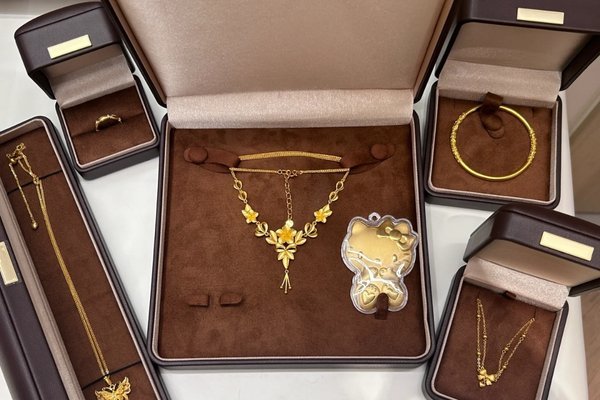
A hinged jewelry box is one of the most classic structures for jewelry. It opens from the back, and the lid stays attached. This makes the opening feel smoother and more gift-like.
For a ring box, the hinged structure gives a strong reveal. The customer opens the lid and sees the ring standing in the center. This small moment can make the product feel more precious.
Hinged boxes feel more jewelry-specific
A hinged jewelry box is different from a normal removable-lid box. The connected lid gives a stronger display feeling. It also helps the box look more like a small jewelry case.
The hinge can be made through the box structure, wrapping material, fabric connection, or a built-in back fold. The right method depends on the box size, material, and opening angle.
| Opening Style | Best For | Buyer Feeling |
|---|---|---|
| Hinged jewelry box | Rings, earrings, pendants | Classic, premium, gift-ready |
| Drawer box | Bracelets, earring cards, small sets | Interactive and modern |
| Lid-and-base box | Entry jewelry and simple gift sets | Clean and cost-friendly |
| Magnetic clamshell box | Jewelry gift sets | Strong unboxing feeling |
Drawer boxes work well for some jewelry
A drawer box can work very well for custom earring packaging. The jewelry can sit on a card or velvet insert, and the customer pulls the drawer out slowly.
This style feels modern and retail-friendly. It can also be easier to pack in cartons if the structure is designed well.
But drawer boxes need good tolerance. If the drawer is too loose, it feels cheap. If it is too tight, the customer may struggle to open it.
Lid-and-base boxes are simple and useful
A lid-and-base box is the classic two-piece structure. It has a separate top lid and a bottom base. This is what many buyers call a top-and-bottom box.
For fashion jewelry or lower-cost product lines, this structure can still work well. It is simple, clean, and easy to brand with a logo.
However, if the jewelry has a higher retail price, I usually suggest upgrading the opening style or the insert. The customer should feel the value before touching the jewelry.
What Materials Can Make Jewelry Boxes Look More Premium?
The surface material controls the first touch. It also decides how the logo will look. For jewelry boxes, material choice is just as important as the box shape.
Premium jewelry boxes can be wrapped with specialty paper, PU leather, microfiber leather, leather-like material, velvet, or suede-like fabric. PU leather is common and cost-friendly. Microfiber leather feels softer and more refined. Specialty paper gives a clean modern look. The best choice depends on brand level, logo craft, color, and target price.
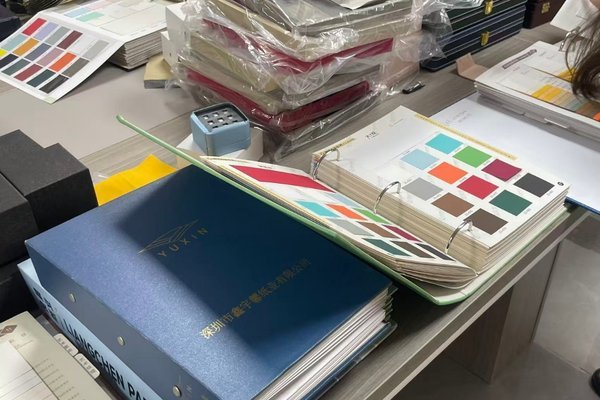
For custom jewelry boxes with logo, the wrapping material needs to match the jewelry value. A premium ring box should not feel like a simple carton. A fashion earring box may need a lighter and more colorful style.
This is why I often suggest comparing several materials before sampling. The same logo can look very different on paper, PU leather, microfiber leather, or velvet.
PU leather is practical and popular
PU leather is widely used for jewelry boxes. It can create a leather-like surface without using genuine leather. It can be smooth, matte, glossy, pebbled, or textured.
PU leather is also practical for mass production. It gives a premium look, but the cost is usually easier to control than real leather or higher-end materials.
| Material | Look and Feel | Best Use |
|---|---|---|
| Specialty paper | Clean, modern, printable | Fashion jewelry and gift sets |
| PU leather | Leather-like and cost-friendly | Rings, earrings, pendants |
| Microfiber leather | Soft, fine, more premium | Fine jewelry and luxury lines |
| Velvet exterior | Soft and rich | Special gift boxes |
| Suede-like fabric | Warm and delicate | Bridal and classic jewelry |
Microfiber leather gives a more refined touch
Microfiber leather is often used when the buyer wants a more premium hand feel. It can feel softer, finer, and more delicate than common PU leather.
This material is suitable for fine jewelry, bridal jewelry, and higher-value gift packaging. The cost is higher, but the result can better match premium products.
For brands selling small but high-value jewelry, the hand feel matters a lot. The customer may judge the product quality from the box before seeing the jewelry clearly.
Specialty paper can still look premium
Not every premium jewelry box needs leather-like material. Some brands prefer specialty paper because it looks clean, modern, and more minimal.
Textured paper, soft-touch paper, or long-fiber paper can also create a high-end look. These materials can be good for modern jewelry brands that want a lighter and cleaner design.
The key is not using the most expensive material. The key is choosing the material that matches the jewelry, logo, and brand tone.
How Should Foil, Debossing, and Logo Placement Be Chosen?
The logo should make the box feel branded, not crowded. A small, clean jewelry box logo often looks more premium than a large and heavy logo.
For custom jewelry boxes with logo, foil stamping gives a bright luxury effect. Debossing gives a subtle tactile feeling. Embossing can create a raised logo effect. Logo placement should stay clean and balanced, especially on small hinged jewelry boxes. The logo craft must match the wrapping material, logo line thickness, and box surface.
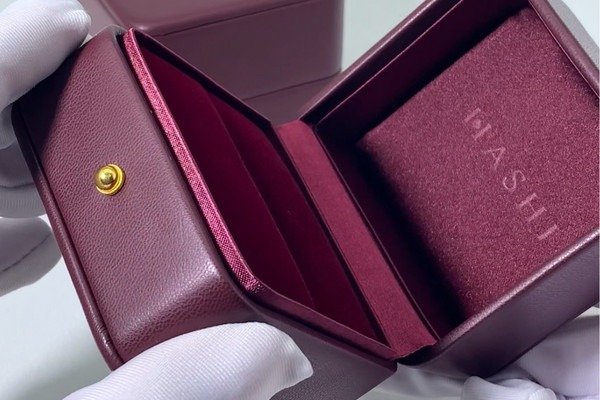
A jewelry box logo may be placed on the top lid, inside lid, insert card, sleeve, or pouch. The placement depends on how the brand wants the customer to experience the box.
For a hinged box, the top lid logo is very common. It gives strong retail visibility. An inner lid logo feels more private and elegant.
Foil stamping gives shine
Hot foil stamping is one of the most popular logo methods for jewelry packaging. Gold foil, silver foil, rose gold foil, and champagne foil all work well for jewelry brands.
Foil looks strong on black, cream, brown, burgundy, navy, and dark green surfaces. It also photographs well, which is useful for online brands.
However, foil needs the right logo thickness. Very thin lines may not stamp cleanly. Small letters may also become hard to read.
| Logo Craft | Best Effect | Factory Check Point |
|---|---|---|
| Foil stamping | Bright, luxury, visible | Logo line thickness |
| Blind debossing | Quiet, premium, tactile | Surface softness and pressure |
| Embossing | Raised and decorative | Logo shape and plate accuracy |
| Printed logo | Flexible and colorful | Ink adhesion on material |
| Foil + deboss | 3D luxury effect | Pressure and material testing |
Debossing creates quiet luxury
Blind debossing presses the logo into the surface without metallic foil. It can look very elegant on PU leather, microfiber leather, and some specialty papers.
This method is suitable for brands that want a softer luxury feeling. It does not shine, but it feels refined when the material is right.
If the logo needs more visibility, foil debossing can be a better choice. It gives both depth and shine.
Logo placement should respect the jewelry
The logo should not compete with the product. For small jewelry boxes, a large logo can make the box feel less refined.
I usually suggest a clean logo size on the lid. For custom earring packaging, the logo can also be added to the earring card. This helps the brand stay visible when the earrings are displayed.
Before production, it is better to provide vector logo artwork. This helps the factory check foil, embossing, debossing, and printing more accurately.
How Should Inserts Be Designed for Rings, Earrings, Necklaces, and Bracelets?
The insert is the part that makes the jewelry look stable and valuable. It should be designed from the product shape, not only from the box size.
Jewelry box insert design should start from the jewelry type. Rings need a firm slot. Earrings need holes, cards, or raised pads. Necklaces need hooks and a hidden chain area. Bracelets need a groove, pillow, or elastic fixing. Velvet lining, flocked surfaces, sponge, wrapped board, and shaped supports can all be used.
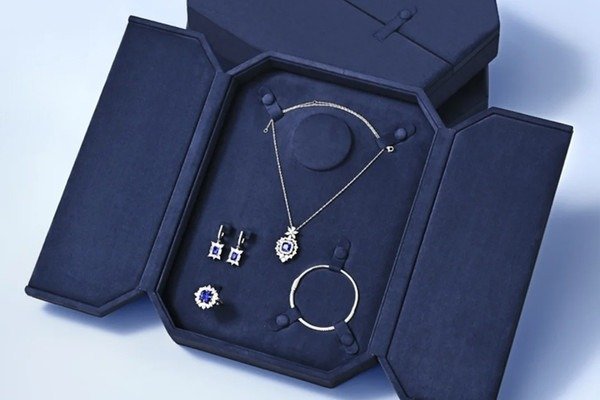
For jewelry boxes, the insert is not only protection. It is part of the display. If the insert is too flat or too loose, the jewelry may look cheaper.
A ring should stand upright. Earrings should be balanced. A necklace should not show messy chains. A bracelet should not shake inside the box.
Inserts can use board, sponge, plastic, or wrapped supports
The insert material depends on the product and target budget. Some inserts use sponge with velvet. Some use wrapped board. Some use flocked plastic trays. Some use a mixed structure.
For premium custom jewelry packaging with logo, I often prefer a clean and fitted insert. The jewelry should look centered and ready for gifting.
| Jewelry Type | Insert Design | Important Detail |
|---|---|---|
| Ring | Slot or sponge ring pad | Keep ring upright |
| Stud earrings | Card with holes | Keep spacing equal |
| Long earrings | Taller card or hanging holes | Avoid bending |
| Necklace | Hooks and chain pocket | Hide chain neatly |
| Bracelet | Pillow, groove, or elastic | Stop movement during shipping |
Velvet lining improves the gift feeling
Velvet lining is very common for jewelry boxes. It gives softness and makes the jewelry feel more precious.
Black velvet gives a classic luxury look. Cream velvet feels soft and romantic. Brown velvet feels warm and traditional. Grey velvet can feel modern and calm.
The lining color should match the jewelry. Gold jewelry often looks good on black, cream, brown, or deep green. Silver jewelry often looks good on black, grey, navy, or white.
Finger notches improve the user experience
A finger notch is a small half-moon cutout. It helps the customer lift an insert, card, or jewelry panel.
This detail is small, but it makes the box easier to use. It also shows that the design was considered carefully.
For premium jewelry boxes, I like adding these small practical details. They help the box feel more thoughtful, not just more expensive.
What Should Buyers Confirm Before Making a Custom Jewelry Box Sample?
A good sample needs clear product information. If the factory only receives an outside box size, the result may not show the jewelry in the best way.
Before making custom jewelry boxes with logo, buyers should confirm jewelry type, product size, product weight, target quantity, opening style, structure method, surface wrapping material, lining color, insert design, logo artwork, and delivery country. These details help the factory decide whether to use an existing plastic core size or a solid wood layered board structure cut to custom dimensions.
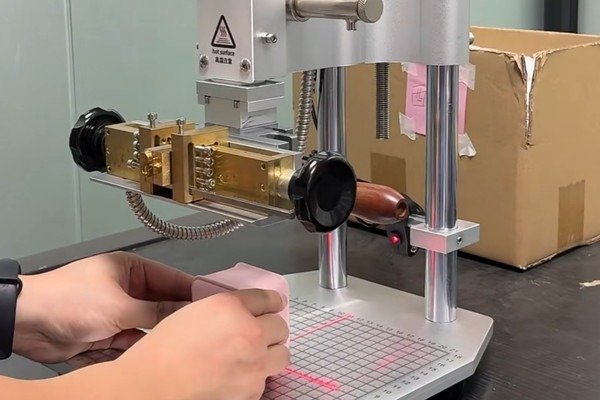
For factory-side planning, I do not start with only length, width, and height. Jewelry boxes need product logic.
Two necklaces may need different packaging even if they have similar box sizes. One may have a large pendant. One may have a thin chain. One may need hooks. One may need a flat card.
Product details help choose the right structure
The most useful information is the real product photo, product size, product weight, and jewelry type. If the buyer has a reference box photo, that also helps a lot.
For rings, I need to know the ring height. For earrings, I need to know whether they are studs, hoops, or long earrings. For necklaces, I need pendant size and chain length.
| Information Needed | Why It Matters |
|---|---|
| Jewelry type | Decides insert structure |
| Product dimensions | Controls box and inner space |
| Product weight | Affects support and protection |
| Opening style | Changes unboxing feeling |
| Structure method | Decides plastic core or wood layered board |
| Wrapping material | Controls touch and brand level |
| Logo file | Decides foil, debossing, or printing |
| Target quantity | Affects cost and structure options |
| Delivery country | Helps plan packing and shipping |
Quantity affects the production method
For small orders, it may be better to choose from existing plastic core sizes and customize the wrapping, logo, and insert. This helps control cost and speed up sampling.
For more custom dimensions, a solid wood layered board structure is more flexible. The box size, hinge, insert, and material can all be adjusted around the jewelry.
This is why I usually provide different solutions. One can be more cost-friendly. One can be more premium. One can be more suitable for luxury gifting.
Ask for an industry-specific box suggestion
Jewelry packaging should not be copied directly from cosmetic boxes or general gift boxes. Rings, earrings, necklaces, and bracelets all need different display logic.
If you are planning custom jewelry packaging with logo, you can send your jewelry category, product photo, size, weight, logo file, target quantity, and delivery country.
I can suggest a suitable custom jewelry box structure, surface material, logo method, lining color, and insert design based on your product category.
Conclusion
Custom jewelry boxes with logo should feel like small display cases, not simple paper gift boxes. Standard plastic core sizes can work for common jewelry boxes, while solid wood layered board is better for custom dimensions. Request an industry-specific jewelry box suggestion before sampling.